USGA agronomist Ty McClellan visited yesterday. He was impressed with conditions here at Wakonda and stated that we are in very good shape when compared to other courses he has visited recently. We will have more on Ty's visit in a future posting.
Wednesday, August 11, 2010
Water Water Everywhere
"Same old song and dance." We are still locked in a battle with the elements. We've received over 8 inches of rain through the 9th of August. The torrential downpours could not come at a worse time for the golf course. The extreme heat and humidity cause disease pressure to skyrocket. When we receive excess water during times of extreme heat our turf declines at a rapid pace. Creeping bentgrass roots begin to recede when soil temperatures exceed 86 degrees Fahrenheit. Yesterday we observed afternoon soil temperatures exceeding 93 degrees. Wet soil gets hotter than dry soil and is much slower to cool overnight. Until the weather breaks, areas such as 8 fairway (pictured below) will keep getting worse. Attempts to repair these ares by seed or sod must wait until temperatures fall.
Pictured below is a view from the 11th fairway. Puddles of water, shallow and deep, can be found throughout the property.

Our heavy duty trash pumps have run non- stop all week but each night's rain seems to nullify the previous day's progress.
Course's throughout the country are feeling the pressure this year. You know it's getting bad when articles start appearing in The Wall Street Journal. Wakonda's greens are still very healthy despite the horrible weather conditions. Our success can be attributed to the new turf cultivars being grown in sandy soil with plenty of air movement & sunlight. The new turf still has roots approximately 8 inches deep while many other course's greens have less then 4 inches.
USGA agronomist Ty McClellan visited yesterday. He was impressed with conditions here at Wakonda and stated that we are in very good shape when compared to other courses he has visited recently. We will have more on Ty's visit in a future posting.
Monday, August 2, 2010
Fighting the Good Fight
It has been a challenging season for us here with the grounds department. With the rain falling down outside, we feel it is a good time to take a moment to reflect on the season, comment on our current circumstances, and outline our thoughts going forward.
We experienced a very productive spring characterized by dry, mild temperatures. The favorable weather allowed us to have a great beginning to summer. The course was in tremendous condition for Blazer Days in the beginning of June.
During Blazer Days the weather began to turn for the worse. The Saturday rounds were barely completed before heavy rains commenced. Once the rain started to fall, we received a continual cycle of severe weather which made a mess of the golf course. We received over 14 inches of rain in June and 5 inches in July.
During this time we witnessed a drastic decline in turf quality in some areas of the course which are still with us. Many low- lying areas in the fairways literally drowned in standing water. These areas can be witnessed on holes 1, 3, 8, 11, and 13.
The poor condition of some of the rough is a a different situation. Like the fairways, some of the rough declined due to excess water. However, there were other stresses in play in the rough which also contributed to turf decline. First, is cart traffic. During wet weather we try to find a delicate balance when restricting carts. Generally, when the course is wet, carts are kept off the fairways and the rough is subsequently abused. Finally, hot, humid, rainy weather is prime conditions for turf diseases to form. We are able to fight off these diseases using plant protectants on the greens, tees, and fairways. These products are extremely expensive so use in the rough is not an economically feasible option. Pictured below is an area on the 6th hole which we will likely seed in the coming weeks.
Wakonda is not the only course experiencing these losses. For further reading check out the iaTURF blog.
Work to repair these areas began weeks ago but our efforts keep getting hampered by storm cleanup. Going forward we will evaluate areas in the fairways and the rough. Some areas will recover on their own. These areas are what we refer to as 'dormant'- the turf is not dead but growth has ceased until the stresses subside. In areas which will not recover we will be sodding and seeding. The best time of year for these activities is approaching during the end of August. You will also see us correcting drainage issues and utilizing other methods such as aerification and fertilization to promote turf recovery. We are confident that with favorable weather and a lot of manpower we will have the course in good condition through the fall.


Before and after pictures of the 13th fairway. This area was sodded a couple weeks ago and is now barely noticeable.
This has been our most lengthy blog posting to date- a fitting tribute to a season which has stressed the grounds crew. In closing we would like to focus on the fact that the greens are performing extremely well. The weather and storm cleanup has interrupted our routine of green maintenance but we feel that our members can be very proud of the playability and turf quality on Wakonda's putting surfaces.
We experienced a very productive spring characterized by dry, mild temperatures. The favorable weather allowed us to have a great beginning to summer. The course was in tremendous condition for Blazer Days in the beginning of June.
During Blazer Days the weather began to turn for the worse. The Saturday rounds were barely completed before heavy rains commenced. Once the rain started to fall, we received a continual cycle of severe weather which made a mess of the golf course. We received over 14 inches of rain in June and 5 inches in July.
During this time we witnessed a drastic decline in turf quality in some areas of the course which are still with us. Many low- lying areas in the fairways literally drowned in standing water. These areas can be witnessed on holes 1, 3, 8, 11, and 13.
The poor condition of some of the rough is a a different situation. Like the fairways, some of the rough declined due to excess water. However, there were other stresses in play in the rough which also contributed to turf decline. First, is cart traffic. During wet weather we try to find a delicate balance when restricting carts. Generally, when the course is wet, carts are kept off the fairways and the rough is subsequently abused. Finally, hot, humid, rainy weather is prime conditions for turf diseases to form. We are able to fight off these diseases using plant protectants on the greens, tees, and fairways. These products are extremely expensive so use in the rough is not an economically feasible option. Pictured below is an area on the 6th hole which we will likely seed in the coming weeks.
Work to repair these areas began weeks ago but our efforts keep getting hampered by storm cleanup. Going forward we will evaluate areas in the fairways and the rough. Some areas will recover on their own. These areas are what we refer to as 'dormant'- the turf is not dead but growth has ceased until the stresses subside. In areas which will not recover we will be sodding and seeding. The best time of year for these activities is approaching during the end of August. You will also see us correcting drainage issues and utilizing other methods such as aerification and fertilization to promote turf recovery. We are confident that with favorable weather and a lot of manpower we will have the course in good condition through the fall.

Before and after pictures of the 13th fairway. This area was sodded a couple weeks ago and is now barely noticeable.This has been our most lengthy blog posting to date- a fitting tribute to a season which has stressed the grounds crew. In closing we would like to focus on the fact that the greens are performing extremely well. The weather and storm cleanup has interrupted our routine of green maintenance but we feel that our members can be very proud of the playability and turf quality on Wakonda's putting surfaces.
Tuesday, July 20, 2010
Weekend Carnage!
Early Sunday morning we were hit by a severe thunderstorm. Local news reported winds in excess of 70 MPH. We received 1.5 inches of rain very quickly. Bunkers are washed out... again. We had many branches blown out of trees. One tree on the 5th hole was blown over completely and several others received enough damage that they may have to be removed. Some fairly impressive damage can be observed around the driving range. The fence to the south of the range along Watrous was nearly blown over with the posts being bent near the base. The fence along the south side of the tennis facility was also badly damaged. The grounds crew will have a busy week cleaning and repairing the course in the wake of this summer's latest storm.
The bunker in front of 12 green. This scene has repeated itself entirely too frequently this year.

Two large branches are being cleaned up to the east of the 1st fairway.
This tree is located between 3 green and 4 tee. The tree was split in half by the high winds.
This is a picture of the Oak that was blown over on the 5th hole.
This tree was hit by lightning approximately a month ago. It is located near the red tee on the 7th hole. We posted a picture of the trunk of this tree in an earlier blog posting. Notice the foliage that is dying where the lightning struck. We will keep an eye on this tree, hopefully it will survive.
Two large branches are being cleaned up to the east of the 1st fairway.
Thursday, July 15, 2010
Team Member Spotlight: Jaret Vasey
Here at the grounds department we often refer to Irrigation Technician, Jaret Vasey, as "The Glue." Jaret has worked at Wakonda Club for fifteen years and has a wealth of knowledge and experience that keep the wheels turning here at the club. Jaret has his hands in everything we do. He maintains our fleet of equipment and often repairs machinery and systems for other departments. Jaret is also responsible for sharpening all of our mowers- he maintains a 'quality of cut' that is experienced by every golfer.
Jaret is an excellent mechanic and fulfills our needs very well, however, his true expertise lies in irrigation. There are very few irrigation problems that he cannot fix. Jaret was here when the irrigation system was installed and knows every inch of pipe that lies beneath the soil. He charges the system in the spring, maintains the irrigation heads through the season, and winterizes the system in the fall. The proper function of the irrigation system is crucial during the hot, dry summer months. Illustrated below are some photos of various aspects of the irrigation system.
Here, Jaret is replacing a solenoid which was fried by a recent lightning strike.
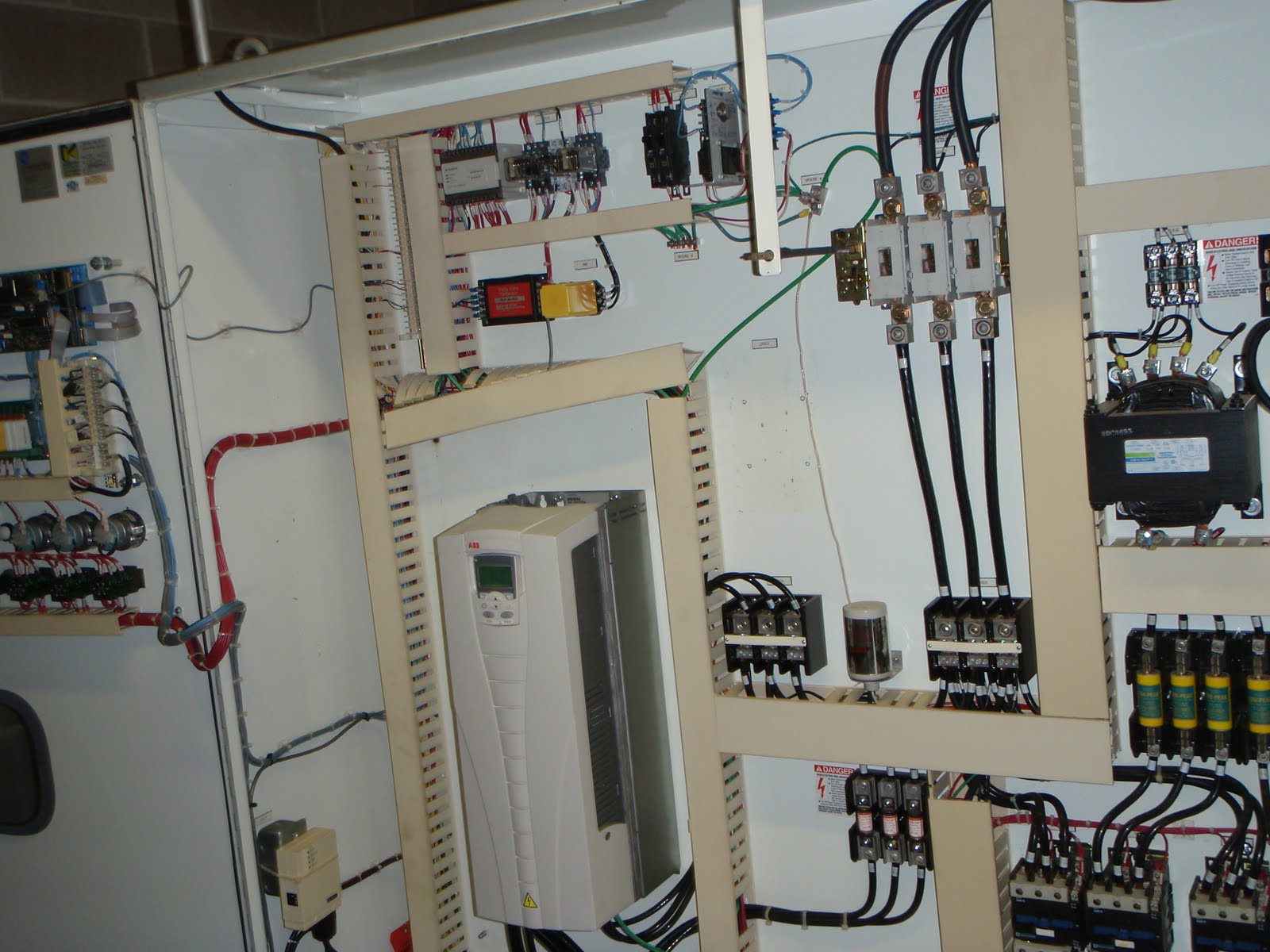
We have over 800 large turf sprinklers at Wakonda Club. Each one has hundreds of parts and systems that must function correctly in order for effective watering. Above are the workings of a typical sprinkler- each head is composed of over 20 parts. Below is one of our control boxes. Each box is essentially a computer. We have 37 control boxes throughout the property.

Pictured here are photos of the inside of our pump station. Our pump station is the small brick building located to the north of hole number 5. This station is computer controlled and is capable of pumping a whopping 1200 gallons of water per minute at 140 PSI. A typical irrigation cycle will take approximately 8 hours to complete overnight.

Jaret is an excellent mechanic and fulfills our needs very well, however, his true expertise lies in irrigation. There are very few irrigation problems that he cannot fix. Jaret was here when the irrigation system was installed and knows every inch of pipe that lies beneath the soil. He charges the system in the spring, maintains the irrigation heads through the season, and winterizes the system in the fall. The proper function of the irrigation system is crucial during the hot, dry summer months. Illustrated below are some photos of various aspects of the irrigation system.
Tuesday, July 13, 2010
Member/ Member, Lone Leaf
It has been a busy week here with the Wakonda Club Grounds Department. We worked feverishly following the July 4th holiday to prepare the course for the Member/ Member event on July 9th and the Ladies' Lone Leaf July 13th & 14th. Our staff put in extra hours to have the course in the best possible condition for our members.
Current activities throughout the course are pictured below.
You may have noticed that we removed a large Bur Oak to the west of 6 fairway. The tree was rapidly dying due to old- age (220 years.) The green committee had golfer safety concerns and recommended it for removal. After an aborist's consultation the decision was made to remove the tree. We are currently planting 4 Bur Oaks in the vicinity as replacements. Pictured above you will see workers planting the new trees and the hole from the old tree which has been filled and seeded.
Bunkers are all in acceptable playing condition for the first time in weeks. Pictured above is the bunker to the left of 5 green. Approximately half of the sand had to be removed from this bunker due to contamination caused by June's heavy downpours. We have begun checking depth and redistributing sand throughout the bunkers on the course.
We have also begun the process of sodding blemishes in the fairways. You will notice areas which declined severely in June due to excess rainfall. We will sod the worst areas and will identify other areas which can be improved through seeding. Pictured above and below is an area which is being sodded on the 13th fairway.
Many of you may wonder where we obtain replacement sod for our fairways. Pictured below is our turf nursery which is located along the south end of the driving range. We have a section of A1/ A4 green- height turf and a larger section of Pennlinks II/ Penneagle II turf which can be utilized on the fairways. This area is an extremely valuable asset to our operation because the turf is a perfect match for the varieties established on the golf course. As you can see, we have plenty of sod which will make a big impact for a quick recovery in the fairways. We will reseed bare areas this fall and will have a fresh crop for harvest next season should the need arise.
Current activities throughout the course are pictured below.
Friday, July 2, 2010
Ground Under Repair
June is over and the rain has finally stopped. We recorded a whopping 14 + inches of rain for the month. The course has dried nicely with this weeks warm, arid weather. Currently we have some areas of the course which are still quite wet while other areas are becoming fairly dry. The wet ares are locations where sub- surface ground water continues to be shed from the property. The disparity in moisture conditions makes the task of watering the course more difficult.
You will notice that some turf turned from deep green to brown very quickly. We attribute this condition to two causes. First, our turf actually loses roots when rain continues to saturate over a period of several weeks- once the rain stops the turf is "shocked" when it actually has to "work" for water. The second cause of the brown turf in the rough is because of cart traffic on the stressed turf. The brown turf is primarily being experienced in the rough and will recover with time.
The nice weather has allowed us to improve the condition of the bunkers. The bunker on hole 17 was nearly destroyed by the 4 inches of rain we received last weekend.
We determined that some of the drainage piping was actually damaged so we extracted bad areas and repaired the drain while we had all the sand removed. We will continue the description of our repairs in the next blog post...
Ground Under Repair Continued
The bulk of the work on this project was the cleanup and prep work. Friday morning we began refilling the bunker with sand and had the project completed by lunch time.
Our large material wagon is a valuable asset which allowed us to complete this project rapidly. Here our technician dumps approximately 5 cubic yards of fresh sand into the bunker. Plywood was used throughout the project to minimize damage to the surrounding turf.
We were very thorough in checking that the depth of sand was adequate and consistent.
Spreading the sand and smoothing the surface.
The final step is to "water in" the sand. This helps to settle the bunker and provides a firmer surface.
The project required three days of hard work.
Subscribe to:
Posts (Atom)